
Implantology
Modern Implant Treatment for Long-Term Stability
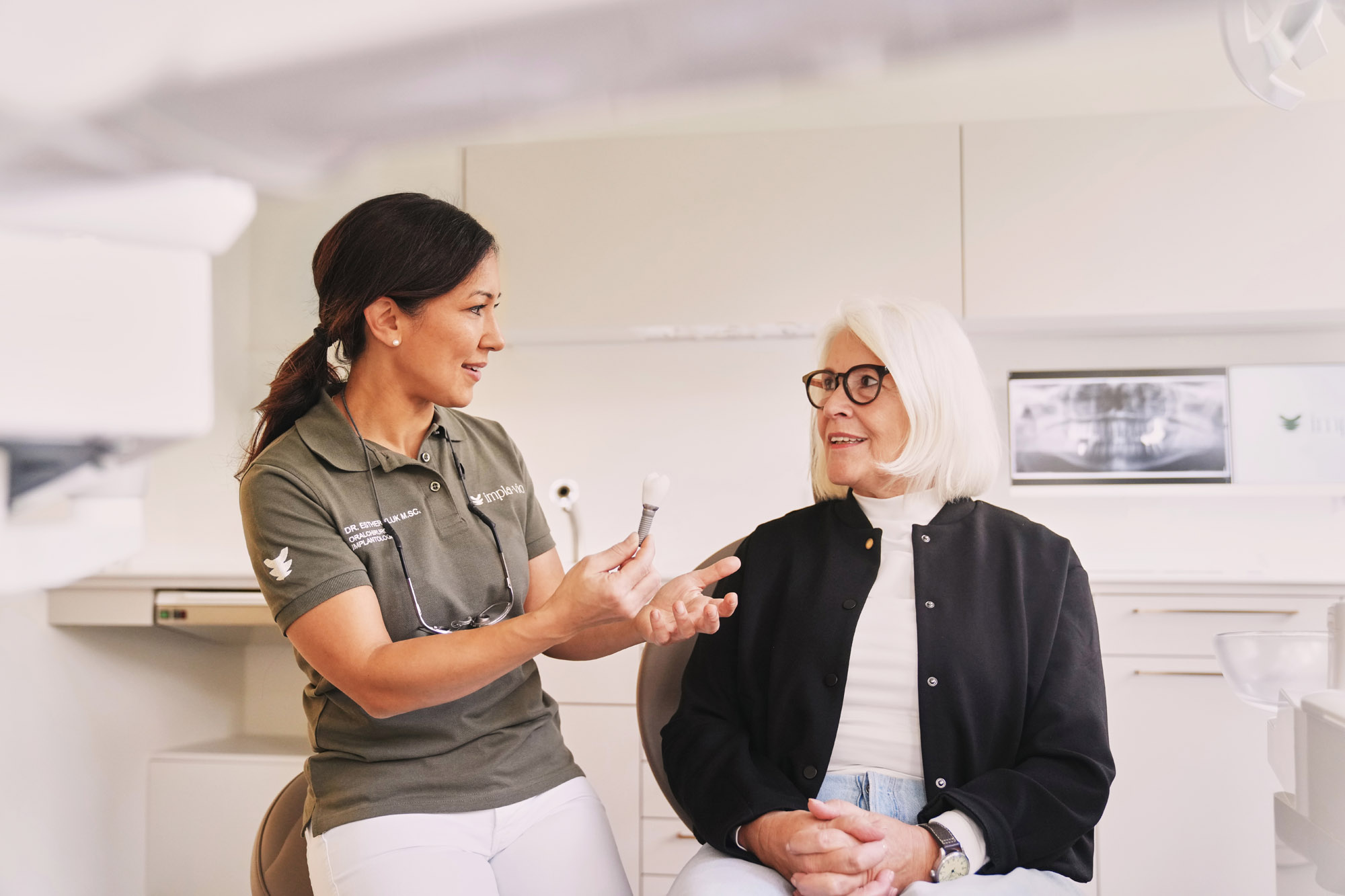
A dental implant replaces the natural tooth root, forming the foundation for dental restorations such as crowns, bridges, and dentures. At IMPLA·VIO in Berlin-Friedenau, Dr. Esther Kluk & her colleagues are experienced specialists who treat you with precision and care. Our specialist dentists reliably assess even complex initial situations and develop precise, individualized surgical solutions.
The success of an implant depends critically on individual conditions. If stable bone substance is lacking, bone augmentation may be necessary. Healthy, well-structured soft tissue that forms a stable seal around the implant is equally crucial. Through targeted soft tissue management, we promote tissue healing and achieve an aesthetically pleasing, inflammation-resistant result. IMPLA·VIO’s high hygiene standards ensure that the implant heals safely and remains stable in the long term.
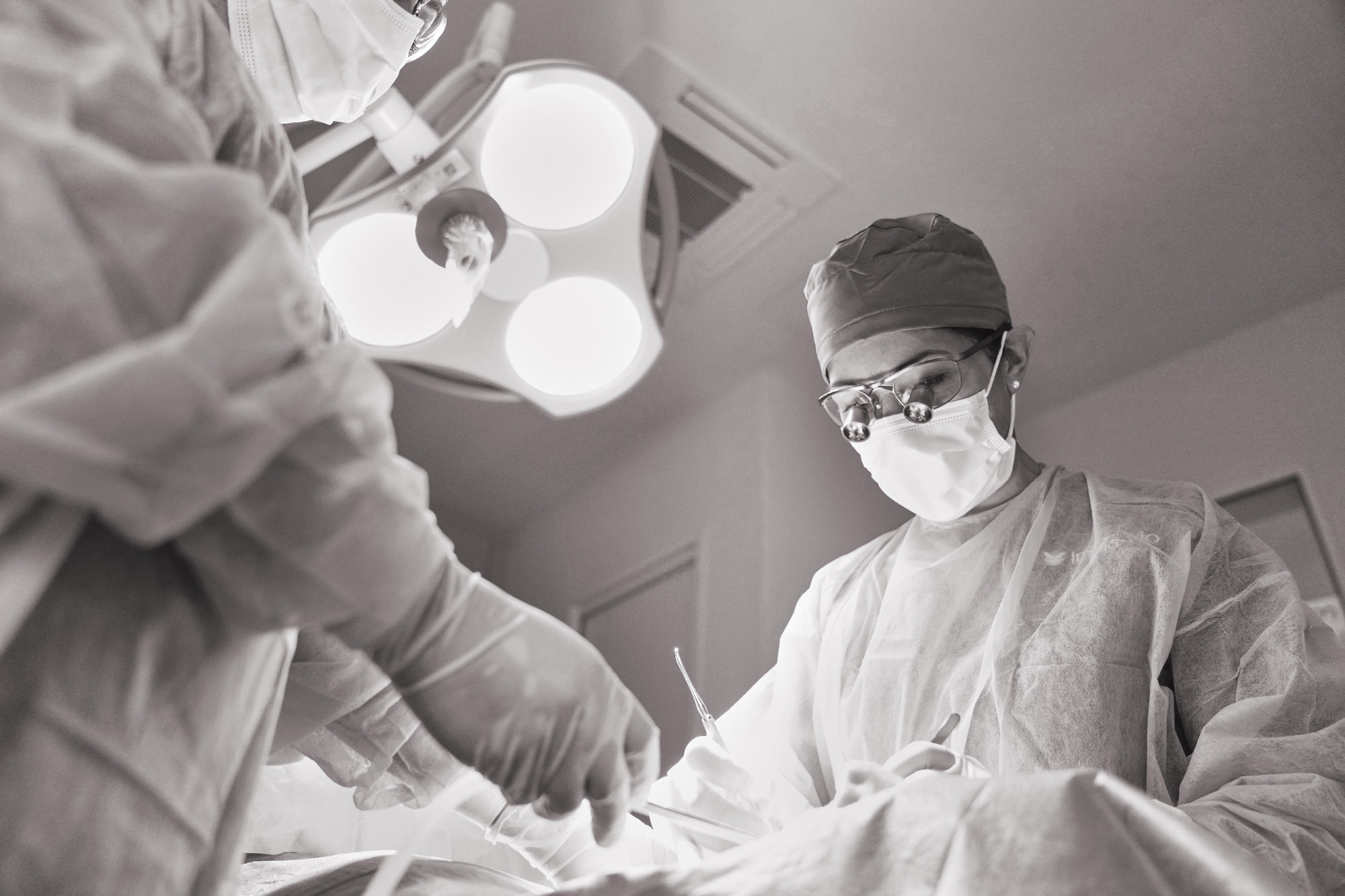
All procedures are performed under local anesthesia. Depending on the complexity of the case and individual preferences, implant placement can also be performed with additional intravenous sedation or under general anesthesia. We work closely with an experienced, well-coordinated anesthesia team to ensure the highest level of safety throughout the entire procedure.
Comprehensive Consultation: Dental Implant Materials
We provide our patients with individualized, targeted consultations when choosing implant material. We primarily use high-quality titanium implants, which have proven to be highly stable and long-lasting. For patients who prefer a metal-free alternative or have a documented titanium intolerance, we offer ceramic implants.
Long-Term Care: Follow-Up & Peri-Implantitis Therapy
Even after successful integration, we support our patients to ensure the long-term stability of their implants. We are also available to patients whose implants were not placed at our practice. If your existing implants show signs of peri-implantitis, we can help with precise diagnostics and gentle, individually tailored treatment plans. This allows us to preserve the health of the surrounding tissue and ensure the longevity of the implants.
How much does a dental implant cost in Berlin?
The cost of a dental implant in Berlin depends on your individual starting situation. Key factors include the required 3D diagnostics, the number of implants, and additional procedures such as bone augmentation or a sinus lift. The choice between titanium and ceramic implants is also not made as a one-size-fits-all decision. At IMPLA·VIO, Dr. Esther Kluk and her colleagues develop a surgically and functionally coherent treatment plan based on the findings—even in complex cases. We discuss the cost framework transparently during your personal implant consultation.
Can implants be placed if you have periodontitis?
Implantology does not begin with the dental implant itself, but with the condition of the tissue. If periodontitis is present, it must first be clarified whether the inflammation is under control and whether the periodontal supporting structures allow for a stable restoration. At IMPLA·VIO, Dr. Esther Kluk and her colleagues assess the periodontal situation, the bone, and the soft tissue. Depending on the findings, this may be followed by implantation, bone augmentation, or initially surgical periodontitis therapy.
Which is better: ceramic or titanium implants?
Ceramic and titanium are not opposing options that can be chosen regardless of the findings. Instead, at IMPLA·VIO the choice of material is integrated into the overall treatment plan. Dr. Esther Kluk and her colleagues do not select implant material based on a general preference, but in interplay with the findings and your personal situation. In addition to bone, soft tissue, load, and prosthetic planning, the wish for a metal-free restoration and individual compatibility considerations can also play a role. Ceramic implants can be an option—provided they fit the specific anatomical and functional starting situation.
When are immediate implants possible?
An immediate implant is placed directly after a tooth is removed. This is possible if the jawbone and gums are sufficiently stable, there is no relevant inflammation, and the implant achieves firm primary stability right away. Whether these requirements are met is shown by a thorough examination with 3D diagnostics. Only then is it decided whether an immediate implant makes sense or whether delayed implantation offers better long-term conditions.
What are the disadvantages of immediate implantation?
Immediate implantation can shorten treatment time, but it is not automatically the best solution. If there is acute inflammation, too little or too weak bone, insufficient stability for the implant, or unfavorable loading, the procedure may be unsuitable. The gums must also be sufficiently stable. In such cases, an initial tooth extraction, bone augmentation, or delayed implantation may be the better option.
How much does a sinus lift cost?
In the lateral upper jaw, the maxillary sinus is often closer to the planned implant site than the available bone. If there is not enough bone for stable anchorage, a sinus lift may be necessary. The cost depends on the extent, the method chosen, and whether it is combined with implantation or bone augmentation. Using state-of-the-art 3D diagnostics, the procedure is planned with precision—we discuss your individual cost framework during the consultation. Whether private health insurance contributes to the costs depends on the medical indication and the terms of your policy.
How much does bone augmentation cost?
Bone augmentation is not a single standard procedure. The cost depends on how much bone is missing, where augmentation is needed, and which method fits the starting situation. Possible options include augmentation, bone spreading, a bone block graft, or a sinus lift. At IMPLA·VIO, the bone, gums, and planned implant position are considered together. This determines the surgical scope—and your individual cost framework. Possible coverage by private health insurance depends on the findings, the required procedure, and your insurance contract. We explain which costs you are likely to have to cover yourself during your personal consultation.
How long does healing take after a dental implant?
A dental implant does not heal according to a fixed schedule. Osseointegration usually takes several months and depends, among other things, on bone quality, implant position, individual wound healing, and additional procedures. After bone augmentation, more time usually needs to be planned than for an uncomplicated single implant. Follow-up care at IMPLA·VIO supports healing attentively and determines the timing of loading on an individual basis.
Dental Implants
Dental implants provide a solid foundation for dental restorations while preserving neighboring teeth that would typically need to be ground down for conventional bridges. At Dr. Esther Kluk & Colleagues, we place a particular emphasis on implantology.
Ceramic Implants
Ceramic implants offer a metal-free, compatible solution for dental implant treatments. They consist of biocompatible high-performance ceramics and are characterized by excellent tissue compatibility and low plaque adhesion – ideal conditions for long-term stable implant care.

Bone Grafting
Dental implants require a robust foundation. If the jawbone does not provide sufficient substance due to missing teeth, inflammation, or long-term toothlessness, we create the conditions for a successful implantation with bone augmentation.
Soft Tissue Augmentation/Management
A secure hold for dental implants requires not only sufficient bone substance, but also healthy, resilient soft tissue. If the gums have receded or have been affected by diseases such as periodontitis, the long-term stability of an implant may be at risk.
Peri-Implantitis Treatment
With dental implants, inflammatory changes can occur in the surrounding tissue—so-called peri-implantitis. This form of peri-implant inflammation is comparable to periodontitis, which is also triggered by bacterial colonization.